


Die Castings
Guangway Machinery:Your Professional Die Castings Manufacturer!
Guangway Machinery is a leading industry player in making mechanical components. We have a focus in manufacturing and custom and want to provide our clients with specialized needs in a number of industries. Our complete scope of services consists of forging, casting, CNC machining, and extrusions in copper, and it's all done to a high level and with a high level of precision.
-
![Aluminum Die Castings for Automotive Parts]() Aluminum Die Castings for Automotive PartsAluminum Alloy Selection: Motor vehicles commonly employ aluminium alloys with better strength and corrosive performance, e.g., A380 and ADC12. Aluminum alloys in these grades possess an ideal...read more
Aluminum Die Castings for Automotive PartsAluminum Alloy Selection: Motor vehicles commonly employ aluminium alloys with better strength and corrosive performance, e.g., A380 and ADC12. Aluminum alloys in these grades possess an ideal...read more -
![Aluminum Die Castings for Industrial Applications]() Aluminum Die Castings for Industrial ApplicationsAluminum Alloy Grade: We procure top-grade aluminium alloys such as A380, A360, etc. It is reportedly known to have an optimum balance between strength, anti-cum corrosion property, and...read more
Aluminum Die Castings for Industrial ApplicationsAluminum Alloy Grade: We procure top-grade aluminium alloys such as A380, A360, etc. It is reportedly known to have an optimum balance between strength, anti-cum corrosion property, and...read more -
![Aluminum Die Castings for Aerospace Components]() Aluminum Die Castings for Aerospace ComponentsThe choice is essential in aerospace uses. Aluminum alloys employed in aerospace typically fall under categories A356 and A380. A356 has greater strength - to - weight ratio and is fairly...read more
Aluminum Die Castings for Aerospace ComponentsThe choice is essential in aerospace uses. Aluminum alloys employed in aerospace typically fall under categories A356 and A380. A356 has greater strength - to - weight ratio and is fairly...read more -
![Aluminum Die Castings for Heavy Machinery]() Aluminum Die Castings for Heavy MachineryThe Aluminum Die Castings Heavy Machinery is an essential part to support meeting performance requirements in heavy equipment. Heavy Machinery Aluminum Die Castings leverage the unique...read more
Aluminum Die Castings for Heavy MachineryThe Aluminum Die Castings Heavy Machinery is an essential part to support meeting performance requirements in heavy equipment. Heavy Machinery Aluminum Die Castings leverage the unique...read more -
![Aluminum Die Castings for Precision Engineering]() Aluminum Die Castings for Precision EngineeringAluminum Grade: Heavy strength aluminium alloys such as A380 tend to be employed in engine die-castings. A380 offers better fluidity in die-casting required to fill in intricate engine part molds....read more
Aluminum Die Castings for Precision EngineeringAluminum Grade: Heavy strength aluminium alloys such as A380 tend to be employed in engine die-castings. A380 offers better fluidity in die-casting required to fill in intricate engine part molds....read more -
![Aluminum Die Castings for Medical Devices]() Aluminum Die Castings for Medical DevicesAluminum die-casting in medial equipment is die-casting products manufactured by aluminium alloys to highest degree of accurateness. These products have a vital part to be played in most medial...read more
Aluminum Die Castings for Medical DevicesAluminum die-casting in medial equipment is die-casting products manufactured by aluminium alloys to highest degree of accurateness. These products have a vital part to be played in most medial...read more -
![Aluminum Die Castings for Motor Parts]() Aluminum Die Castings for Motor PartsCAD Modeling: Design an exact 3D CAD model of motor parts by Computer-Aided Design (CAD) computer programs. This CAD model should indicate exactly the die-casting products' tolerance and...read more
Aluminum Die Castings for Motor PartsCAD Modeling: Design an exact 3D CAD model of motor parts by Computer-Aided Design (CAD) computer programs. This CAD model should indicate exactly the die-casting products' tolerance and...read more -
![Aluminum Die Castings for Electronics]() Aluminum Die Castings for ElectronicsAlloy Designation: Pure aluminium has been most predominantly used in forms such as ADC12 and A380. ADC12 possesses preferable strength in strength-related factors, corrosional stability, and is...read more
Aluminum Die Castings for ElectronicsAlloy Designation: Pure aluminium has been most predominantly used in forms such as ADC12 and A380. ADC12 possesses preferable strength in strength-related factors, corrosional stability, and is...read more -
![Zinc Alloy Die Castings for Automotive Parts]() Zinc Alloy Die Castings for Automotive PartsThe zinc employed in making motor parts is mostly an advanced-grade zinc alloy, e.g., Zamak 3 or Zamak 5. Zamak 3 is fluid to an optimum degree to accomplish in filling complicated die cavities in...read more
Zinc Alloy Die Castings for Automotive PartsThe zinc employed in making motor parts is mostly an advanced-grade zinc alloy, e.g., Zamak 3 or Zamak 5. Zamak 3 is fluid to an optimum degree to accomplish in filling complicated die cavities in...read more -
![Zinc Alloy Die Castings for Industrial Applications]() Zinc Alloy Die Castings for Industrial ApplicationsZinc Die-Casting Alloys: Industrially employed zinc die-casting zinc alloys most used are Zamak 3 (ASTM AG40A), Zamak 5 (ASTM AG41A) and Zamak 2 (ASTM AG60A). Zamak 3 is superior in castability,...read more
Zinc Alloy Die Castings for Industrial ApplicationsZinc Die-Casting Alloys: Industrially employed zinc die-casting zinc alloys most used are Zamak 3 (ASTM AG40A), Zamak 5 (ASTM AG41A) and Zamak 2 (ASTM AG60A). Zamak 3 is superior in castability,...read more -
![Zinc Alloy Die Castings for Aerospace Components]() Zinc Alloy Die Castings for Aerospace ComponentsZinc Alloy Grade: Grade zinc alloys such as Zamak 3 or Zamak 5 can be employed. Zamak 3 is better in fluidity, needed in filling complicated die cavities in die-casting. It is heavily castable and...read more
Zinc Alloy Die Castings for Aerospace ComponentsZinc Alloy Grade: Grade zinc alloys such as Zamak 3 or Zamak 5 can be employed. Zamak 3 is better in fluidity, needed in filling complicated die cavities in die-casting. It is heavily castable and...read more -
![Zinc Alloy Die Castings for Heavy Machinery]() Zinc Alloy Die Castings for Heavy MachineryZinc Alloy Grade: We typically take superior grade zinc alloys such as Zamak 3, Zamak 5, or specially created zinc alloys. Zamak 3 has better castability, strength, and corrosional strength and is...read more
Zinc Alloy Die Castings for Heavy MachineryZinc Alloy Grade: We typically take superior grade zinc alloys such as Zamak 3, Zamak 5, or specially created zinc alloys. Zamak 3 has better castability, strength, and corrosional strength and is...read more


Why Choose Us
Quality Assurance
As an ISO 9001 certified company, we implement strict quality control measures at every stage of production. Our state - of - the - art testing apparatus, such as spectrometers, metallographic testers, and hardness testers, are used to ensure the quality of materials and the accuracy of processing dimensions.
Material Expertise
At Guangway Machinery, we understand that material selection has a huge impact on mechanical part performance and lifespan. This is why our workshop machines a huge variety of materials like carbon steel, alloy steel, stainless steel, brass, copper, tin bronze, and aluminum alloy. We select each material with consideration to its particular properties and application requirements.
Customization Design
We have a skilled set of engineers who can collaborate with you to design customized mechanical components. We can design in 3D and provide detailed drawings using sophisticated design software to your requirements so that you get your finished item in the way you desire.
Our Services
We offer a warranty for our mechanical parts. We'll repair or replace them free of charge in case there's a problem with quality during warranty.Our after-sale service team can give you tips and guidance to extend your parts' lifespan.

Advantages of Die Castings
Dimensional accuracy and stability
Die casting produces parts that are durable and dimensional stable while maintaining tight tolerances. They are also heat resistant.
Strength and weight
Die castings are stronger than injection molded parts of the same size. Thin-walled castings are stronger and lighter than other casting methods. Also, because die castings are not composed of individual parts welded or held together, the strength depends on the alloy rather than the joining process.
Simplified assembly
Die castings provide integral fastening elements such as bosses and studs. The holes can be cored and made to tap bit size, or external threads can be cast.
High mechanical properties
Die castings feature excellent mechanical properties. As the liquid metal solidifies under high pressure, the product appears to be fine, compact, and crystalline. Die castings are rigid with high hardness and strength. Also, they have improved durability and high conductivity.
Variety of surface textures
Die castings can have many finishing techniques and surfaces. The process is capable of achieving smooth or textured part surfaces.
Application of Die Castings
Automotive industry: Die casting is used extensively in the automotive industry. It’s often used to create engine blocks, cylinder heads, and transmission cases.
Electrical industry: The electrical industry also relies on die casting for a variety of applications. Die castings are used in the manufacture of electrical components such as switchgear, panel boards, and circuit breakers.
Aerospace Industry: The aerospace industry is a major user of die casting. The manufactured parts are used in the manufacture of aircraft and spacecraft components
Appliance Industry: The appliance also uses this process to manufacture die castings for many appliances
Furniture Industry: It is also used in the furniture industry. It’s often used to create furniture hardware such as drawer pulls and knobs
Construction Industry: The construction industry makes use of the die casting process in making hardware like hinges, window frames, and fixtures. The manufacturing process can produce parts with complex shapes hence it is important when functions and aesthetic appeal are important.
Parameters
|
Product name |
Die Castings |
|
OEM&ODM |
Yes, as per drawing or sample |
|
Processing |
Turning, washing, polishing, sandblasting, gear hobbing |
|
Materials |
Aluminumin/zinc /magnesium/brass/iron/steel etc. |
|
Surface Treatment |
Shot/sand blast, polishing, Primer Painting , Powder coating, ED- Coating, Finish Painting, Anodize (White or Black Color), as customers request. |
|
Tolerance |
+/-0.1-- +/-0.5mm |
|
Size |
Customer's Drawing Required |
|
Color |
Customzied |
Material of Die Castings
Aluminum:
Known for its lightweight and excellent corrosion resistance, aluminum is a popular choice for die casting. It is widely used in the automotive and aerospace industries for parts that require high strength-to-weight ratios.
Zinc:
Zinc die casting is favored for its low melting point, high ductility, and ability to produce parts with intricate details. It is commonly used in consumer electronics, automotive components, and hardware.

Magnesium:
Magnesium is the lightest structural metal, making it ideal for applications where weight reduction is critical. It offers good strength and is often used in the automotive and electronics industries.
Copper Alloys:
Copper alloys, such as brass and bronze, are used for their excellent thermal and electrical conductivity. They are suitable for plumbing, electrical components, and decorative applications.
The Die Casting Process: Step-by-Step
Mold Design
The process begins with the design of the mold, or die, which must withstand high pressures and temperatures. Molds are usually created from hardened steel and designed with great precision using CAD (computer-aided design) software. Dies are typically built in two sections to allow for the easy ejection of the cast part.
Metal Preparation
Once the mold is ready, the metal is melted to its liquid state in a furnace. The choice of metal will depend on the application, whether it’s aluminum, zinc, or magnesium.
Injection
The molten metal is then injected into the die at high pressure, filling the mold cavity completely. The high pressure ensures that the metal reaches all areas of the mold, creating detailed parts with tight tolerances.
Cooling
After injection, the metal is left to cool and solidify in the die. The cooling process ensures that the part maintains its precise shape.
Ejection and Trimming
Once the part has solidified, the die is opened, and the part is ejected. Excess material like flash is trimmed away to create the final product.
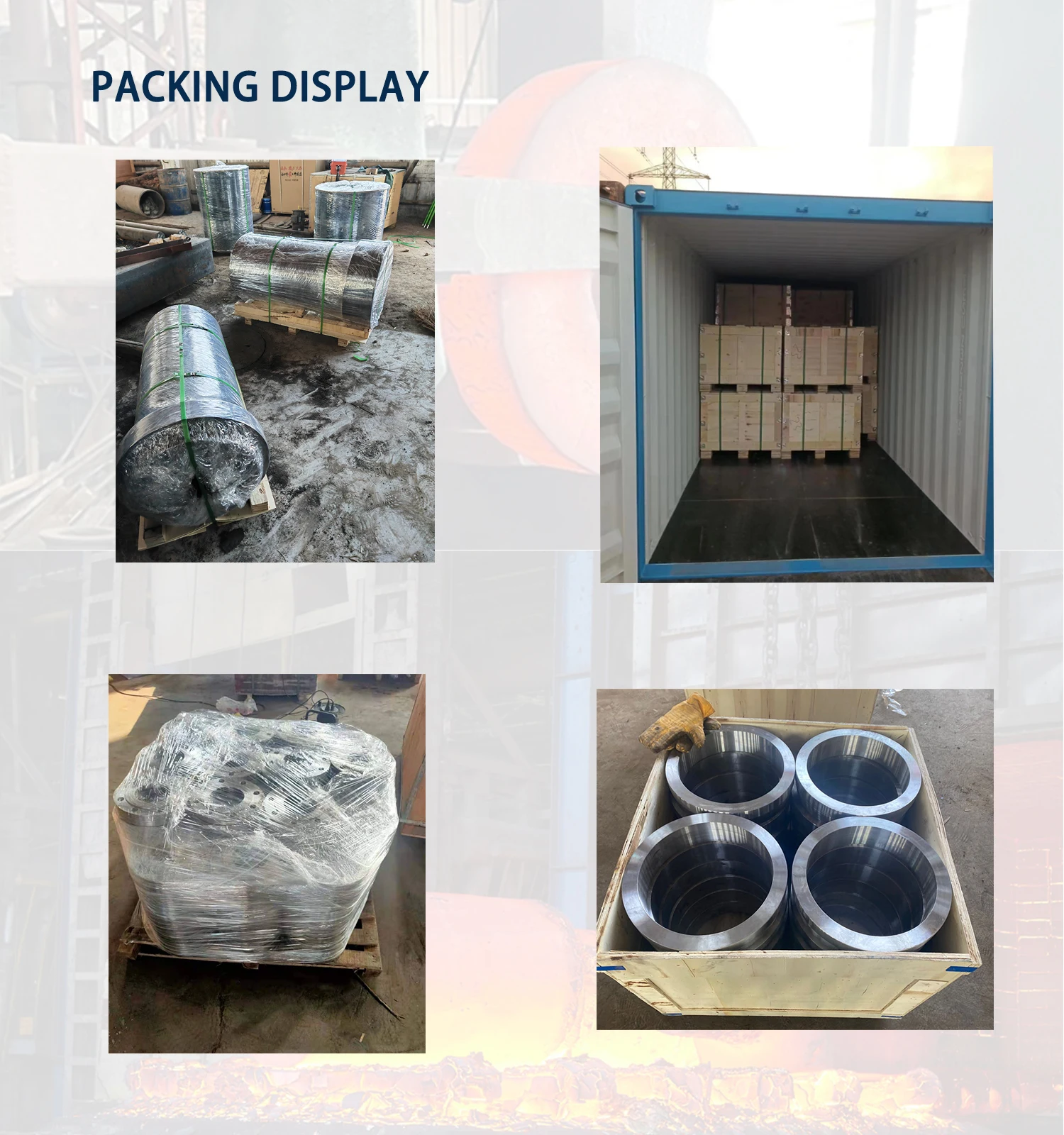
Packaging and Shipping
Inner Packaging
Strong & waterproof plastic big is packed inside, to keep the product in safe condition.Or as customer requests.
Outer Packaging
Multilayer wooden box with strong bandages, used for standard export package. Or customized as per customer's requirements.

Our Certificates


FAQ
We're professional die castings manufacturers and suppliers in China, specialized in providing high quality customized service. We warmly welcome you to buy bulk die castings made in China here from our factory.
Zinc Alloy Die Castings for Aerospace Components, CNC Milling Parts for Aerospace Industry, SDP Shaped Charges for Economical Casing Guns