


Castings
Guangway Machinery:Your Professional Castings Manufacturer!
Guangway Machinery is a leading industry player in making mechanical components. We have a focus in manufacturing and custom and want to provide our clients with specialized needs in a number of industries. Our complete scope of services consists of forging, casting, CNC machining, and extrusions in copper, and it's all done to a high level and with a high level of precision.
-
![Aluminium Bronze Castings]() Aluminium Bronze CastingsAluminium bronze castings have been known to exhibit greater corrosive strength, durability to wearing down, and strength in handling. Their applications in aerospace, shipping, and mechanical...read more
Aluminium Bronze CastingsAluminium bronze castings have been known to exhibit greater corrosive strength, durability to wearing down, and strength in handling. Their applications in aerospace, shipping, and mechanical...read more -
![Water-glass Casting for Valve Components]() Water-glass Casting for Valve ComponentsWater - glass - choose high - quality water - glass with appropriate modulus and concentration. Modulus also affects bonding power as also speed of hardening. In case of valve parts, a water -...read more
Water-glass Casting for Valve ComponentsWater - glass - choose high - quality water - glass with appropriate modulus and concentration. Modulus also affects bonding power as also speed of hardening. In case of valve parts, a water -...read more -
![Water-glass Casting for Machinery Components]() Water-glass Casting for Machinery Components- Material Selection: The material is predominantly made from wood, plastic, or metal. Small - scale production as well as prototypes are affordable with wood. Polystyrene is also used as plastic...read more
Water-glass Casting for Machinery Components- Material Selection: The material is predominantly made from wood, plastic, or metal. Small - scale production as well as prototypes are affordable with wood. Polystyrene is also used as plastic...read more -
![Water-glass Casting for Pumps]() Water-glass Casting for PumpsWater - glass casting, which is also referred to as sodium silicate casting, is a cast that is predominantly utilized in pump production. The pump that is cast is highly dimensionally accurate...read more
Water-glass Casting for PumpsWater - glass casting, which is also referred to as sodium silicate casting, is a cast that is predominantly utilized in pump production. The pump that is cast is highly dimensionally accurate...read more -
![Water-glass Casting for Oil and Gas Components]() Water-glass Casting for Oil and Gas Components- Water - glass: The water - glass with appropriate modulus and density is used. The binding properties are affected by the modulus and fluidity as well as coating thickness is affected by...read more
Water-glass Casting for Oil and Gas Components- Water - glass: The water - glass with appropriate modulus and density is used. The binding properties are affected by the modulus and fluidity as well as coating thickness is affected by...read more -
![Water-glass Casting for Heavy Machinery]() Water-glass Casting for Heavy Machinery- Selection of Metals: In water - castings in machinery that is high - strength alloy steel, cast ductile iron, or carbon steel are generally preferred. Such a metal will be having appropriate...read more
Water-glass Casting for Heavy Machinery- Selection of Metals: In water - castings in machinery that is high - strength alloy steel, cast ductile iron, or carbon steel are generally preferred. Such a metal will be having appropriate...read more -
![Water-glass Casting for Automotives]() Water-glass Casting for AutomotivesWater - glass casting, also known as sodium silicate casting, is a universal process of investment casting that is greatly accepted in the automotive industry. The procedure is cost - effective in...read more
Water-glass Casting for AutomotivesWater - glass casting, also known as sodium silicate casting, is a universal process of investment casting that is greatly accepted in the automotive industry. The procedure is cost - effective in...read more -
![Water-glass Casting for Agriculture Machinery]() Water-glass Casting for Agriculture Machinery- Water - glass Selection: Choose high - quality water - glass with appropriate modulus as well as density. A suitable range in castings' modulus is 2.2 - 3.3. The water - glass density will also...read more
Water-glass Casting for Agriculture Machinery- Water - glass Selection: Choose high - quality water - glass with appropriate modulus as well as density. A suitable range in castings' modulus is 2.2 - 3.3. The water - glass density will also...read more -
![Silica Sol Casting for Valve Components]() Silica Sol Casting for Valve ComponentsMaterial Selection: The high - precision pattern is generally cast from a wax. The rationale is that a wax is a simple shape with a low melting point. The pattern from a wax is designed with a...read more
Silica Sol Casting for Valve ComponentsMaterial Selection: The high - precision pattern is generally cast from a wax. The rationale is that a wax is a simple shape with a low melting point. The pattern from a wax is designed with a...read more -
![Silica Sol Casting for Machinery Components]() Silica Sol Casting for Machinery ComponentsSilica Sol: Silica sol with a desirable distribution in terms of particle size, concentration of solids, as well as viscosity is utilized as binder. 30 - 40% concentration of solids with 10 - 20...read more
Silica Sol Casting for Machinery ComponentsSilica Sol: Silica sol with a desirable distribution in terms of particle size, concentration of solids, as well as viscosity is utilized as binder. 30 - 40% concentration of solids with 10 - 20...read more -
![Silica Sol Casting for Pumps]() Silica Sol Casting for PumpsSilica sol casting is a high - precision manufacturing procedure that is utilized in a bid to create high - quality pump components. The procedure is favored as it can create parts with intricate...read more
Silica Sol Casting for PumpsSilica sol casting is a high - precision manufacturing procedure that is utilized in a bid to create high - quality pump components. The procedure is favored as it can create parts with intricate...read more -
![Silica Sol Casting for Oil and Gas Components]() Silica Sol Casting for Oil and Gas ComponentsSilica Sol: Silica sol with high quality is also a binder. Silica sol is coating in both its nature as also in high temperature stability. The concentration is generally 30% - 40% which is good in...read more
Silica Sol Casting for Oil and Gas ComponentsSilica Sol: Silica sol with high quality is also a binder. Silica sol is coating in both its nature as also in high temperature stability. The concentration is generally 30% - 40% which is good in...read more


Why Choose Us
Quality Assurance
As an ISO 9001 certified company, we implement strict quality control measures at every stage of production. Our state - of - the - art testing apparatus, such as spectrometers, metallographic testers, and hardness testers, are used to ensure the quality of materials and the accuracy of processing dimensions.
Material Expertise
At Guangway Machinery, we understand that material selection has a huge impact on mechanical part performance and lifespan. This is why our workshop machines a huge variety of materials like carbon steel, alloy steel, stainless steel, brass, copper, tin bronze, and aluminum alloy. We select each material with consideration to its particular properties and application requirements.
Customization Design
We have a skilled set of engineers who can collaborate with you to design customized mechanical components. We can design in 3D and provide detailed drawings using sophisticated design software to your requirements so that you get your finished item in the way you desire.
Our Services
We offer a warranty for our mechanical parts. We'll repair or replace them free of charge in case there's a problem with quality during warranty.Our after-sale service team can give you tips and guidance to extend your parts' lifespan.
Advantages of Castings
Fewer Restrictions on Size and Complexity:
Castings can be created for parts of virtually any size or complexity level, making it a versatile option.
Greater Range of Metal Options:
A wider range of specialty alloys can be used in castings since chrome, nickel, and molybdenum can be more easily incorporated into the molten metals.


Strength and Durability:
Metal castings possess exceptional strength, durability, and the ability to withstand demanding operating conditions. The casting process allows for the selection of specific alloys and heat treatments, tailoring the mechanical properties of the cast parts to meet the required specifications.
Cost-Effective for Low-Volume Production:
Castings are ideal for producing small production runs more cost-effectively, particularly since the tooling is cheaper than the equivalent forging dies.
Parameters
|
Product Name |
Castings |
|
OEM&ODM |
Yes, as per drawing or sample |
|
Process |
Silica Sol Investment Casting |
|
Water Glass Investmetnt Casting |
|
|
Material |
Carbon steel, Stainless steel, Aluminum, Brass, Bronze, Zinc etc |
|
Surface Treatment |
Polishing, Powder Coating, Zinc Plating, Chrome Plating, Heat Treatment, Tumbling Polishing, Electropolishing. |
|
Heat Treatment |
According to customer's requirements |
|
Casting Tolerance |
CT4-CT6 |
|
Color |
Customzied |
Application of Castings
The automotive industry relies heavily on casting for the production of engine components, transmission parts, and chassis components. Casting techniques such as die casting and sand casting are used to manufacture engine blocks, cylinder heads, pistons, and other intricate parts. Casting allows for the production of lightweight yet robust components that withstand high temperatures, pressure, and mechanical stresses.
In the aerospace and defense sectors, casting is crucial for manufacturing critical components that require high strength, precision, and reliability. From turbine blades and engine casings to structural parts of aircraft and defense systems, casting techniques like investment casting and precision casting are employed. The ability to create intricate and heat-resistant components using casting methods ensures optimal performance, durability, and safety in demanding aerospace and defense applications.
Casting plays a vital role in the energy and power generation sectors, particularly in the production of turbine components for power plants. Casting techniques allow for the creation of parts with intricate cooling channels and advanced materials that enhance efficiency and durability. Renewable energy sources such as wind and hydroelectric power also benefit from casting, with components like turbine hubs and frames being manufactured using casting processes.
Casting is extensively used in the construction industry for creating various structural elements. Precast concrete casting is employed to manufacture precast beams, columns, walls, and other architectural components. This enables faster construction, improved quality control, and cost efficiency. In addition, casting techniques are utilized in the production of metal fittings, decorative elements, and sculptures that adorn buildings and public spaces.
Casting is an integral part of the industrial machinery and equipment manufacturing sector. Heavy machinery, agricultural equipment, and mining machinery rely on casting for the production of robust and intricate parts. Casting techniques are used to manufacture components such as gears, valves, pumps, and housings that endure high loads, vibrations, and corrosive environments.
Not only do castings help promote safety, but they also help promote health. The healthcare and medical industries rely on many cast components within their medical tools and devices to provide the best care possible to patients every day.
Materials Used for Castings
Iron
With a relatively low melting point of around 1,538 °C (2,800 °F), iron is highly suitable for casting processes. Cast iron, in particular, exhibits exceptional castability, owing to its high carbon content and silicon composition.
Steel
Steel is an ideal material to use for castings because of its design flexibility, metallurgical versatility, and weight flexibility.These properties make it a preferred choice for many applications across various industries.
Aluminum
Aluminum and its derivative alloys offer a host of advantages for casted parts. Its low melting point and viscosity when in its molten state, coupled with an ability to cool and solidify into strong, rigid solids, make aluminum a popular material selection for many casting projects.
Copper
Copper boasts remarkable properties that make it highly desirable for casting applications. Copper’s inherent ductility and malleability allow it to be easily shaped into diverse forms.
Nickel
Nickel is regularly utilized as a material for manufacturing various industrial products. In the realm of casting, nickel is often employed to enhance the properties of cast iron and other alloys, bringing about notable improvements in their characteristics.
Zinc
Zinc is a bluish-white metal that is used in casting because of its remarkable properties and versatile nature.Zinc also boasts a low melting point, which allows for easy handling, making it ideal for producing complex designs with high precision.
Type of casting process
Investment Casting
Also referred to as “lost wax process” or shell mold casting, investment casting uses a sacrificial ceramic mold made from a wax template. Advantages of investment casting include its ability to yield parts with high dimensional accuracy and geometric accuracy. This technique is often used for small parts with complex geometries or other parts that are difficult or impossible to shape with machining such as turbine engine blades.
Die Casting
Die casting usually features short cycle times where molten metal is subjected to varying degrees of pressure in the die, followed by rapid cooling via internal channels in the tooling. This technique is suitable for high-volume parts that require an excellent surface finish and need to be produced near-net shape. Die castings are common in the automotive market, especially for electric vehicles because they are lightweight. Engine components such as casings, engine blocks, and bracketery are all produced using die casting methods including high-pressure die casting and permanent mold casting. Aging or a combination of solution and aging are the most common heat treatments for die castings.
Sand Casting
Sand casting is a cost-effective manufacturing method used for components such as brake rotors in addition to some aluminum parts. Components made using sand casting are usually treated with solution and aging, ferritic nitrocarburizing, through hardening, and annealing (or stress-relieving).
Permanent Mold Castings
Permanent mold casting is predominantly used in aluminum for parts such as cylinder heads for cars. A more cost-effective casting method when compared to high-pressure die casting, permanent mold casting allows for the use of salt cores which reduces the cost of the tooling required.
Continual Casting
The continual casting includes continuous pouring, solidification, and part removal in a production line. The setup and process involve a ladle or furnace, and material flows to the mold cavity, passing a control system. Subsequently, a cooling mechanism ( water channels) in the mold reduces the temperature quickly. So, while leaving the mold parts significantly cooler, further water spray brings them to room temperature.
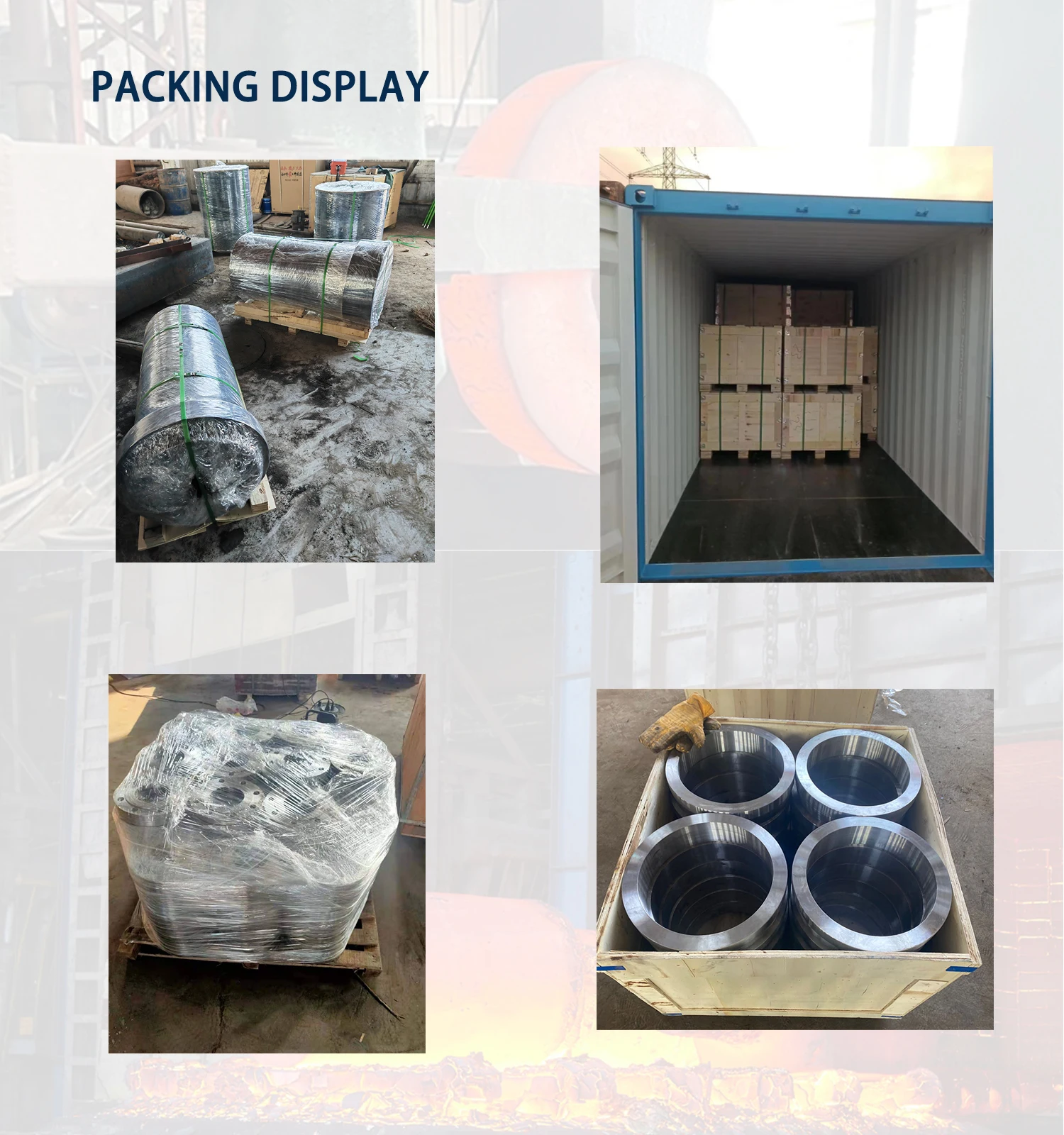
Packaging and Shipping
Inner Packaging
Strong & waterproof plastic big is packed inside, to keep the product in safe condition.Or as customer requests.
Outer Packaging
Multilayer wooden box with strong bandages, used for standard export package. Or customized as per customer's requirements.

Our Certificates


FAQ
We're professional castings manufacturers and suppliers in China, specialized in providing high quality customized service. We warmly welcome you to buy bulk castings made in China here from our factory.